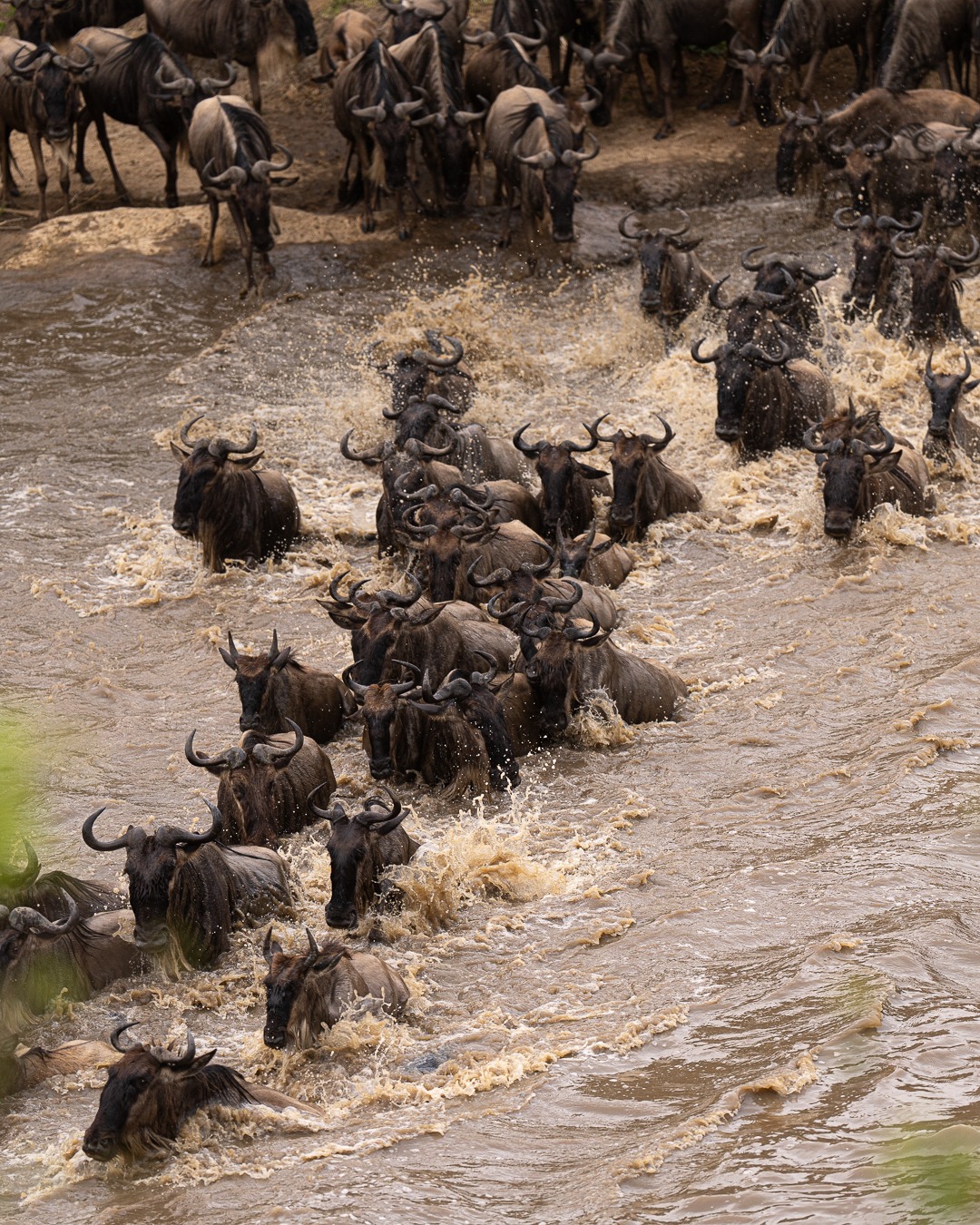
The Great Wildebeest Migration is one of the most spectacular wildlife events in Africa. Every year, more than a million wildebeest, accompanied by hundreds of thousands of zebras and gazelles, move across the Serengeti-Mara ecosystem in search of fresh grass and water.
Serengeti National Park in Tanzania is one of the best places to experience this incredible natural event. Visitors travel from different parts of the world to witness huge herds moving across open plains, newborn wildebeest calves taking their first steps and dramatic river crossings involving crocodiles.
One of the most common questions travellers ask when planning a Tanzania safari is: When is the Great Migration in Serengeti?
The Great Migration happens throughout the year. It does not have one fixed starting or ending date because the animals continuously move between different areas of Tanzania’s Serengeti ecosystem and Kenya’s Maasai Mara.
However, different months offer different experiences. January to March is generally associated with the calving season in southern Serengeti and Ndutu. May to June is associated with movement towards the Western Corridor and Grumeti River, while July to October is a popular period for visiting northern Serengeti to look for Mara River crossings.
In this guide, Pale Tours and Adventure explains the Great Migration month by month, the best time to visit different Serengeti regions, where to see wildebeest and how to plan a successful migration safari.
1. When Does the Great Migration Happen in Serengeti?
The Great Migration takes place all year round. It is a continuous movement of wildlife across the Serengeti-Mara ecosystem rather than a single event that happens during one particular month.
The herds move mainly in response to seasonal rainfall, fresh grazing and water availability. As the grass becomes dry in one region, the animals move towards areas where fresh vegetation is available.
The migration generally follows a seasonal cycle:
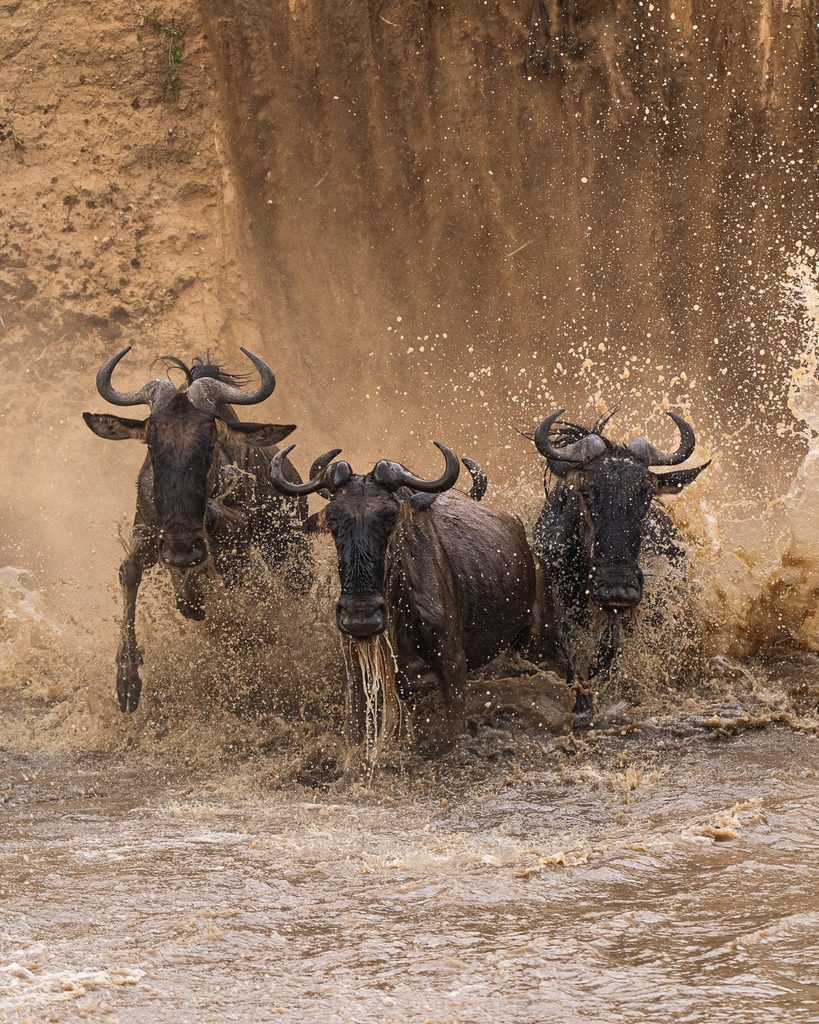
- January to March: Large herds gather in southern Serengeti and Ndutu for the calving season.
- April to May: The herds begin moving north and west through central Serengeti.
- May to June: Many wildebeest move towards the Western Corridor and Grumeti River.
- July to October: Large herds move through northern Serengeti, with opportunities to witness Mara River crossings.
- November to December: The herds generally begin moving south again as seasonal rains return.
These periods are approximate. The exact movement can change depending on rainfall and local grazing conditions.
If you want to see a particular migration event, choosing the correct month and Serengeti region is more important than simply booking a safari anywhere in the park.
2. Great Migration Month-by-Month Calendar
Understanding the migration calendar can help you choose the best time for your Tanzania safari.
The following table provides a general guide to where the herds are commonly found during different months.
| Month | Typical Migration Location | What You May Experience |
|---|---|---|
| January | Southern Serengeti and Ndutu | Large herds gathering and calving beginning |
| February | Ndutu and southern Serengeti | Peak calving season and predator activity |
| March | Southern Serengeti | Calving continues and herds begin spreading |
| April | Southern and central Serengeti | Herds gradually move north and west |
| May | Central Serengeti and Western Corridor | Large moving herds and breeding activity |
| June | Western Corridor and Grumeti | Wildebeest movement and possible Grumeti crossings |
| July | Western and northern Serengeti | Herds move towards northern Serengeti |
| August | Northern Serengeti and Mara River | Strong opportunity to look for river crossings |
| September | Northern Serengeti | River crossing activity may continue |
| October | Northern and eastern Serengeti | Late crossings and gradual southward movement |
| November | Eastern and central Serengeti | Herds begin moving towards southern grazing areas |
| December | Southern Serengeti and Ndutu | Herds return towards the calving grounds |
This calendar is a planning guide, not a guarantee of exact wildlife locations. The migration may happen earlier or later depending on the weather each year.
3. When Is the Best Time to See the Great Migration in Serengeti?
The best time depends on what you want to experience during your safari.
Some travellers want to see thousands of wildebeest crossing rivers, while others prefer watching newborn calves during the calving season.
January to March: Best for the Calving Season
January, February and March are excellent months to visit southern Serengeti and the Ndutu area for the wildebeest calving season.
During this period, large herds gather on the short-grass plains where fresh grazing is available.
February is generally the main calving period, when many wildebeest calves are born within a relatively short time.
Visitors may experience:
- Large herds of wildebeest across open plains.
- Newborn wildebeest calves.
- Zebras and gazelles grazing alongside wildebeest.
- Lions, cheetahs, hyenas and other predators.
- Excellent wildlife photography opportunities.
- Green landscapes and beautiful seasonal scenery.
The calving season is particularly interesting because predators are often attracted to areas where young animals are present.
For travellers interested in seeing newborn wildebeest and predator-prey interactions, January to March is one of the best periods to plan a safari.
April to May: Best for Green Landscapes and Migration Movement
During April and May, the herds generally begin moving away from the southern plains as grazing conditions change.
They gradually move through central Serengeti towards the Western Corridor.
This period can offer a different safari experience compared with the busy river-crossing season.
Visitors may enjoy:
- Long lines of migrating wildebeest.
- Green landscapes after seasonal rainfall.
- Excellent photography opportunities.
- Resident wildlife in central Serengeti.
- Opportunities to observe the herds moving across the plains.
Rainfall can affect road conditions and wildlife distribution, so flexibility is important when planning a safari during these months.
May to June: Best for the Western Corridor and Grumeti River
During May and June, many migrating herds move towards the Western Corridor of Serengeti.
The Grumeti River is an important part of this migration route. Wildebeest must navigate river channels as they continue their seasonal journey.
Depending on the location and timing of the herds, visitors may have opportunities to witness river crossings in the Grumeti region.
This period is suitable for travellers who want to explore a different part of Serengeti beyond the popular central and northern areas.
July to October: Best for Mara River Crossing Opportunities
July, August, September and October are popular months for travellers hoping to see the famous Mara River crossings.
During this period, large herds may be found in northern Serengeti, particularly around areas such as Kogatende and Lamai.
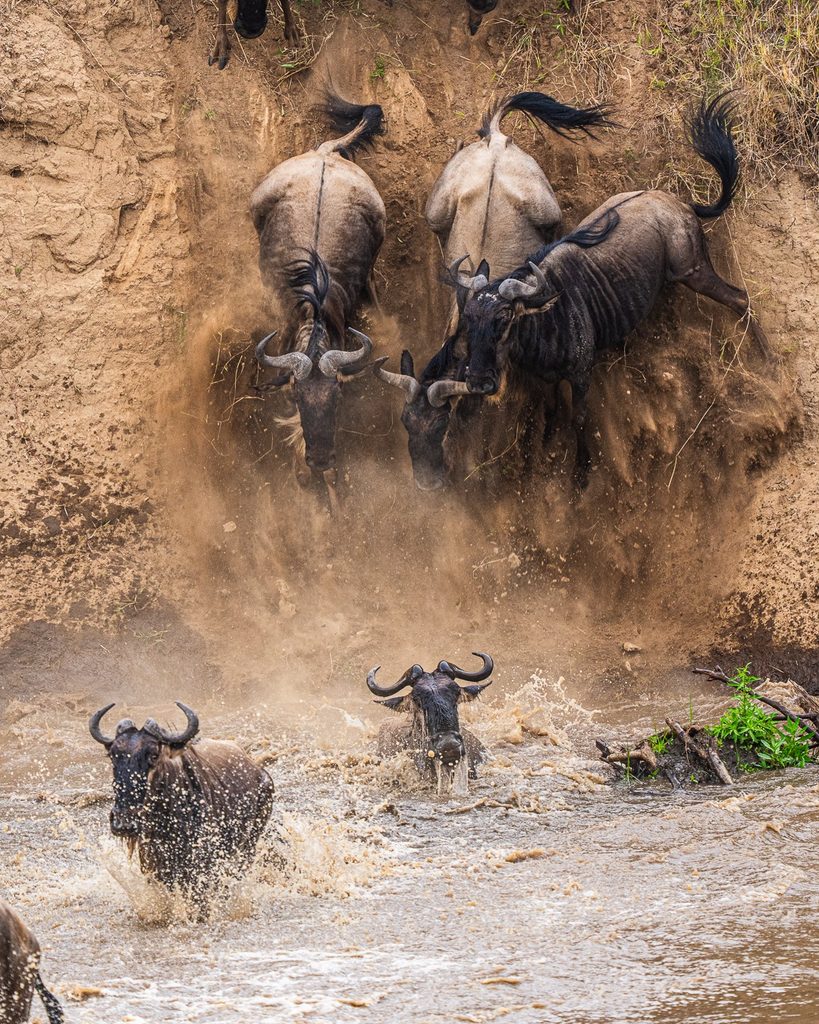
The Mara River is one of the most dramatic parts of the migration journey. Wildebeest gather along the riverbanks before attempting to cross to the other side.
The river contains crocodiles, and the crossing can be challenging for the animals.
Travellers visiting northern Serengeti during these months may experience:
- Large concentrations of wildebeest.
- Herds gathering near riverbanks.
- Possible Mara River crossings.
- Crocodiles in the river.
- Lions, leopards and other predators.
- Beautiful northern Serengeti landscapes.
August and September are often popular months for migration safaris in northern Serengeti.
However, river crossings are natural events and cannot be guaranteed on a particular day or at a specific time.
4. Where Is the Great Migration in Serengeti During Different Months?
The Great Migration moves through several regions of the Serengeti ecosystem throughout the year.
Choosing the right region is important because Serengeti National Park is very large. Travelling from one region to another can take several hours.
Southern Serengeti and Ndutu
Best general period: December to March
Southern Serengeti and Ndutu are famous for the calving season.
The short-grass plains provide suitable grazing conditions for large herds of wildebeest and other grazing animals.
This region is particularly popular with visitors who want to see newborn calves and predators.
Central Serengeti
Best general period: March to May, with resident wildlife throughout the year
Central Serengeti, particularly the Seronera region, is known for its resident wildlife population.
It is a good area for spotting lions, leopards, elephants, giraffes and other animals.
During the migration season, herds may also pass through central Serengeti as they move between southern and western areas.
Western Corridor and Grumeti
Best general period: May to July
The Western Corridor is an important migration area during the movement towards the north.
The Grumeti River is a notable feature of this region, and visitors may have opportunities to observe wildebeest attempting river crossings.
Northern Serengeti and Kogatende
Best general period: July to October
Northern Serengeti is one of the most popular regions for travellers interested in the Mara River crossings.
Kogatende and Lamai are among the areas commonly considered when planning a northern migration safari.
The exact location of the herds changes, so it is important to plan according to recent migration information.
5. When Is the Best Month to See Mara River Crossings?
For travellers whose main goal is to witness Mara River crossings, July to October is generally the most suitable period to consider.
August and September are particularly popular months for visiting northern Serengeti.
During this period, large herds may gather around the Mara River as they move between Tanzania and Kenya.
However, there is no official crossing timetable.
The wildebeest may approach the river and wait for hours or days before crossing. Sometimes they change direction, move to another crossing point or return to the same riverbank.
This is part of the natural behaviour of the migration.
To improve your chances of witnessing a crossing:
- Visit northern Serengeti during the main migration period.
- Stay close to the migration area where possible.
- Allow several days for wildlife viewing.
- Travel with an experienced local safari guide.
- Remain flexible with your daily game drive schedule.
- Follow recent information about herd movements.
A safari operator should never promise a guaranteed river crossing on a specific date.
6. Is February the Best Month to See the Great Migration?
February is one of the best months for travellers interested in the calving season.
During this period, large numbers of wildebeest gather in southern Serengeti and Ndutu.
Many calves are born during a relatively short period, attracting predators such as lions, cheetahs, hyenas and jackals.
February is particularly suitable for:
- Watching newborn wildebeest calves.
- Photographing large herds on open plains.
- Observing predator activity.
- Exploring the Ndutu area.
- Experiencing the green-season landscapes.
If your main interest is the dramatic Mara River crossings, however, February is not the ideal month. You should consider July to October for northern Serengeti instead.
The best month always depends on the wildlife experience you want.
7. Can You See the Great Migration Throughout the Year?
Yes. The Great Migration is a year-round natural movement.
There is no month when the migration completely disappears from the Serengeti-Mara ecosystem.
However, the location and concentration of the herds change throughout the year.
For example, visitors travelling in February may find large herds in southern Serengeti, while those travelling in August may find them in northern Serengeti.
This is why choosing the right safari region is important.
Even when the main migrating herds are elsewhere, Serengeti offers excellent opportunities to see resident wildlife, including lions, elephants, leopards, cheetahs, giraffes, zebras and many other species.
8. How Many Days Do You Need for a Great Migration Safari?
The number of days depends on the migration season and the region you want to visit.
For a migration-focused safari, spending several days in the correct area gives you more time to follow the herds and enjoy wildlife viewing.
Here is a general planning guide:
| Safari Duration | Suggested Experience |
|---|---|
| 3 Days | A short visit to one migration region, depending on arrival point and travel time |
| 4 Days | More time for game drives in the selected Serengeti region |
| 5 Days | A good option for a focused migration safari |
| 6–7 Days | More flexibility to explore different areas and follow wildlife movement |
| 8 Days or More | Opportunity to combine migration areas with other northern Tanzania destinations |
For travellers interested in Mara River crossings, spending around three or more nights in northern Serengeti can provide more opportunities than visiting for only one afternoon.
For the calving season, a safari focused on Ndutu and southern Serengeti is often a good choice.
Your itinerary should also consider travel distances, accommodation location and the time available for game drives.
9. What Other Animals Can You See During the Great Migration?
The Great Migration is not only about wildebeest.
The Serengeti ecosystem supports a wide variety of wildlife, and visitors can encounter many different animals during a migration safari.
Lions
Lions are among the most frequently sought-after predators in Serengeti. They may be seen resting, hunting or moving through the grasslands.
Leopards
Leopards are often found resting in trees or moving through areas with suitable vegetation.
Cheetahs
Cheetahs are commonly associated with open plains where they can use their speed to hunt.
Hyenas
Spotted hyenas are important predators and scavengers in the Serengeti ecosystem. They may be seen near large herds and predator activity.
Elephants
Elephants can be seen in different parts of Serengeti, although their sightings depend on the area and season.
Zebras and Gazelles
Zebras and gazelles are important participants in the wider migration. They often move alongside wildebeest in search of fresh grazing.
Other wildlife includes giraffes, buffaloes, jackals, ostriches, hippos, crocodiles and many bird species.
The combination of migrating herds and resident wildlife makes Serengeti an excellent safari destination throughout the year.
10. Is the Great Migration Worth Visiting in the Rainy Season?
Yes. Visiting Serengeti during the rainy or green season can be a rewarding experience.
The rainy season is associated with fresh vegetation, beautiful landscapes and the calving period in southern Serengeti.
Although rainfall can sometimes affect road conditions and travel schedules, it also supports the natural grazing conditions that attract migrating herds.
Possible advantages include:
- Beautiful green scenery.
- Opportunities to see wildebeest calves.
- Excellent birdwatching.
- Attractive wildlife photography conditions.
- Fewer visitors in some areas compared with peak migration periods.
Travellers should understand that rainfall varies from year to year. It is advisable to plan with a local safari operator who can help select the most suitable route and accommodation.