Tanzania is home to some of the most spectacular wildlife destinations in Africa. Among the most famous are
Serengeti National Park and Ngorongoro Crater, two remarkable destinations that attract travellers from around the world.
Many visitors planning a Tanzania safari often ask: What is the difference between Serengeti National Park and Ngorongoro Crater? Which destination has more wildlife? Which one is better for seeing lions, elephants, rhinos, and other African animals?
Although both destinations offer excellent wildlife experiences, they are very different in terms of geography, landscapes, wildlife movements, and safari activities.
Serengeti is famous for its endless plains, large wildlife populations, and the Great Wildebeest Migration. Ngorongoro Crater is famous for its spectacular volcanic landscape and high concentration of wildlife within a relatively small area.
In this guide, Pale Tours explains the main differences between Serengeti National Park and Ngorongoro Crater to help you choose the right destinations for your Tanzania safari.
Where Are Serengeti National Park and Ngorongoro Crater Located?
Both destinations are located in northern Tanzania and form part of the famous Northern Tanzania Safari Circuit.
Serengeti National Park
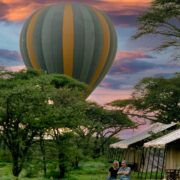
Serengeti National Park is located in northern Tanzania, extending towards the Kenyan border. It covers approximately 14,750 square kilometres and is famous for its vast grasslands, woodlands, rivers, and diverse wildlife habitats.
The park is divided into different regions, including:
- Central Serengeti (Seronera).
- Northern Serengeti (Kogatende and Lamai).
- Western Corridor.
- Southern Serengeti.
Each region offers different wildlife experiences depending on the season.
Ngorongoro Crater
Ngorongoro Crater is located within the Ngorongoro Conservation Area in northern Tanzania.
It is a large volcanic caldera formed when a volcano collapsed after a major eruption. The crater floor contains grasslands, swamps, forests, and a soda lake, creating habitats for many wildlife species.
Unlike Serengeti, where animals move across vast landscapes, the crater provides a relatively compact wildlife-viewing environment.
What Is the Main Difference Between Serengeti and Ngorongoro?
The biggest difference is the landscape and wildlife experience.
Serengeti is a large national park with extensive open plains and several wildlife regions. It is especially famous for the Great Wildebeest Migration and its large predator populations.
Ngorongoro Crater is a natural volcanic caldera where wildlife can often be observed within a relatively concentrated area.
| Feature | Serengeti National Park | Ngorongoro Crater |
|---|---|---|
| Main attraction | Great Migration and vast wildlife areas | Volcanic crater and concentrated wildlife |
| Landscape | Open plains, rivers, woodlands | Crater floor, forests, grasslands, swamps |
| Wildlife experience | Extensive game drives | Wildlife viewing within the crater |
| Famous animals | Wildebeest, lions, cheetahs, leopards | Lions, elephants, buffaloes, black rhinos |
| Safari duration | Often 2–4 days or more | Commonly a full-day crater visit |
| Accommodation | Lodges and tented camps across different regions | Lodges and camps around the conservation area |
| Best known for | Migration and expansive wilderness | Scenic crater views and wildlife diversity |
Both destinations offer memorable safari experiences, but they provide different ways to explore Tanzania’s wildlife.
Which Destination Has More Wildlife?
Both Serengeti and Ngorongoro support impressive wildlife populations, but their wildlife experiences are different.
Serengeti is known for its enormous wildlife ecosystem, including large populations of wildebeest, zebras, gazelles, and predators.
Ngorongoro Crater is known for its high concentration of wildlife within a relatively small area.
Because the crater is geographically enclosed by steep walls, many animals live within or regularly use the crater ecosystem.
However, wildlife sightings depend on the season, weather, animal movements, and the time spent exploring each destination.
Can You See the Big Five in Serengeti and Ngorongoro?
Both destinations are important places to search for Africa’s Big Five:
- Lion.
- Leopard.
- Elephant.
- Buffalo.
- Black rhinoceros.
Big Five in Serengeti
Serengeti supports all five species, although seeing every one during a single safari is not guaranteed.
Lions are frequently encountered in several regions, while leopards can sometimes be spotted resting in trees. Elephants and buffaloes are also present in different habitats.
Black rhinos are rare and difficult to see.
Big Five in Ngorongoro
Ngorongoro Crater is particularly well known for opportunities to see several Big Five species in one day.
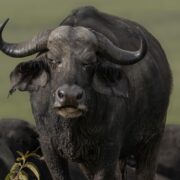
Lions, elephants, buffaloes, and black rhinos are among the animals visitors hope to encounter.
The crater is one of the important destinations for searching for the endangered black rhinoceros, although sightings are never guaranteed.
Which Destination Is Better for the Great Wildebeest Migration?
If your main interest is the Great Wildebeest Migration, Serengeti National Park is the better destination.
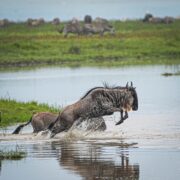
The migration involves approximately 1.5 million wildebeest, together with large numbers of zebras and gazelles, moving through the Serengeti ecosystem in search of fresh grazing and water.
Different regions of Serengeti offer migration opportunities at different times of the year.
- January to March: Southern Serengeti and Ndutu region are important for the calving season.
- April to June: Herds commonly move through the central and western areas.
- July to October: Northern Serengeti is a popular region for migration viewing and possible Mara River crossings.
- November to December: Herds often move towards the eastern and southern grazing areas.
These are general seasonal patterns. Actual animal movements depend on rainfall and grazing conditions.
Ngorongoro Crater is not the main destination for viewing the Great Migration. Travellers interested in migration should plan to spend time in the appropriate Serengeti region.
Which Destination Is Better for Seeing Lions?
Both destinations offer opportunities to see lions.
Serengeti has a well-known lion population, and visitors may encounter prides resting in the grasslands, near rocky outcrops, or around areas with abundant prey.
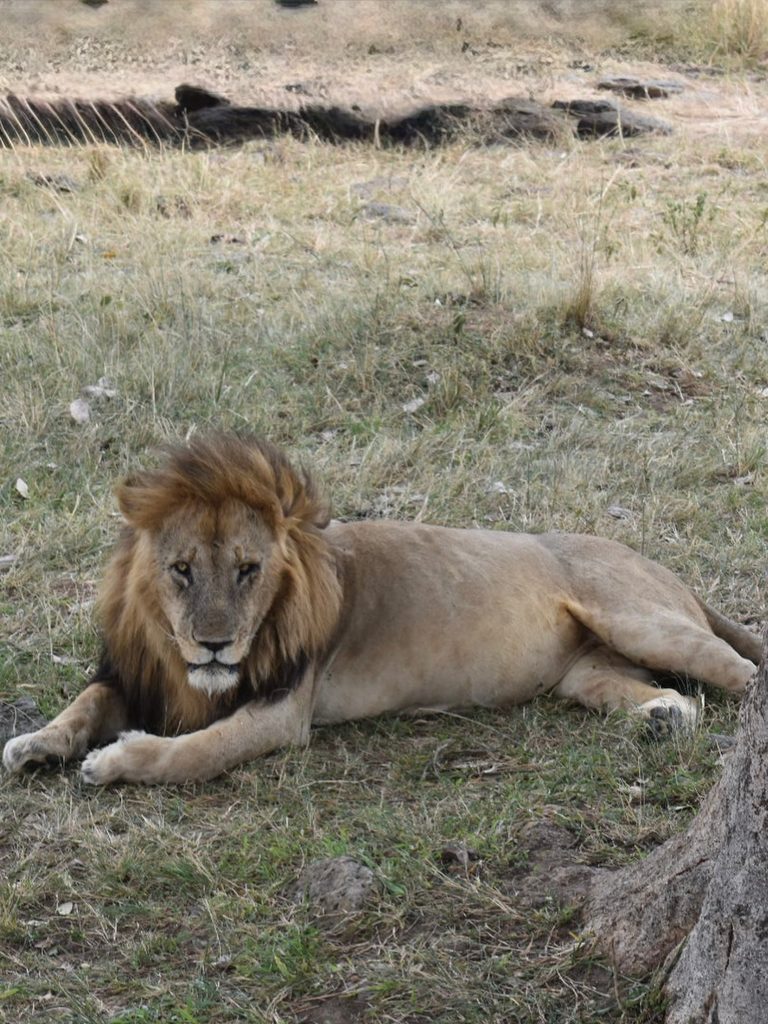
Ngorongoro Crater also has lions and offers opportunities to observe them in its open grasslands.
The best choice depends on your itinerary, the time of year, and wildlife conditions. Neither destination guarantees a lion sighting on every game drive.
What Are the Landscapes Like?
The landscapes are among the most noticeable differences between these destinations.
Serengeti Landscapes
Serengeti is famous for its seemingly endless plains.
Visitors can experience:
- Golden grasslands.
- Rocky kopjes.
- Seasonal rivers.
- Woodlands.
- Open savannah.
- Wide horizons and beautiful sunsets.
The landscape changes as you travel between the central, northern, western, and southern regions.
Ngorongoro Crater Landscapes
Ngorongoro offers a different type of scenery.
The crater is surrounded by steep walls, while the floor contains grasslands, swamps, woodland areas, and Lake Magadi.
From the crater rim, visitors can enjoy impressive panoramic views before descending to explore the crater floor.
How Many Days Do You Need for Serengeti and Ngorongoro?
The ideal safari duration depends on your budget, interests, and travel schedule.
Serengeti National Park
A minimum of two days in Serengeti can provide a rewarding wildlife experience, although three or more days allow visitors to explore more areas and enjoy additional game drives.
If you want to follow the Great Migration, the number of days and the region you visit are especially important.
Ngorongoro Crater
Many travellers visit Ngorongoro Crater for one full day.
A typical itinerary includes an early departure, descent into the crater, several hours of wildlife viewing, a picnic lunch, and an afternoon ascent.
Combining Both Destinations
A popular option is to combine Serengeti and Ngorongoro in a three- to five-day northern Tanzania safari.
This allows visitors to experience the open plains of Serengeti and the unique volcanic landscape of Ngorongoro.
Is Serengeti More Expensive Than Ngorongoro?
The overall cost depends on several factors, including accommodation, park and conservation fees, transportation, safari duration, and the season.
Serengeti safaris can cost more because travellers may spend several nights in the park, travel longer distances, and stay in lodges or tented camps located in different regions.
Ngorongoro visits may be shorter, but conservation and crater-related fees can contribute significantly to the total cost.
When comparing quotations, check whether the price includes:
- Accommodation.
- Meals.
- Safari vehicle.
- Professional guide.
- Park and conservation fees.
- Crater service fees.
- Airport and hotel transfers.
A detailed quotation makes it easier to compare the actual value of different safari packages.
Where Should You Stay During Your Safari?
Both destinations offer different accommodation options.
Accommodation in Serengeti
Visitors can choose from:
- Budget public campsites.
- Budget tented camps.
- Mid-range safari lodges.
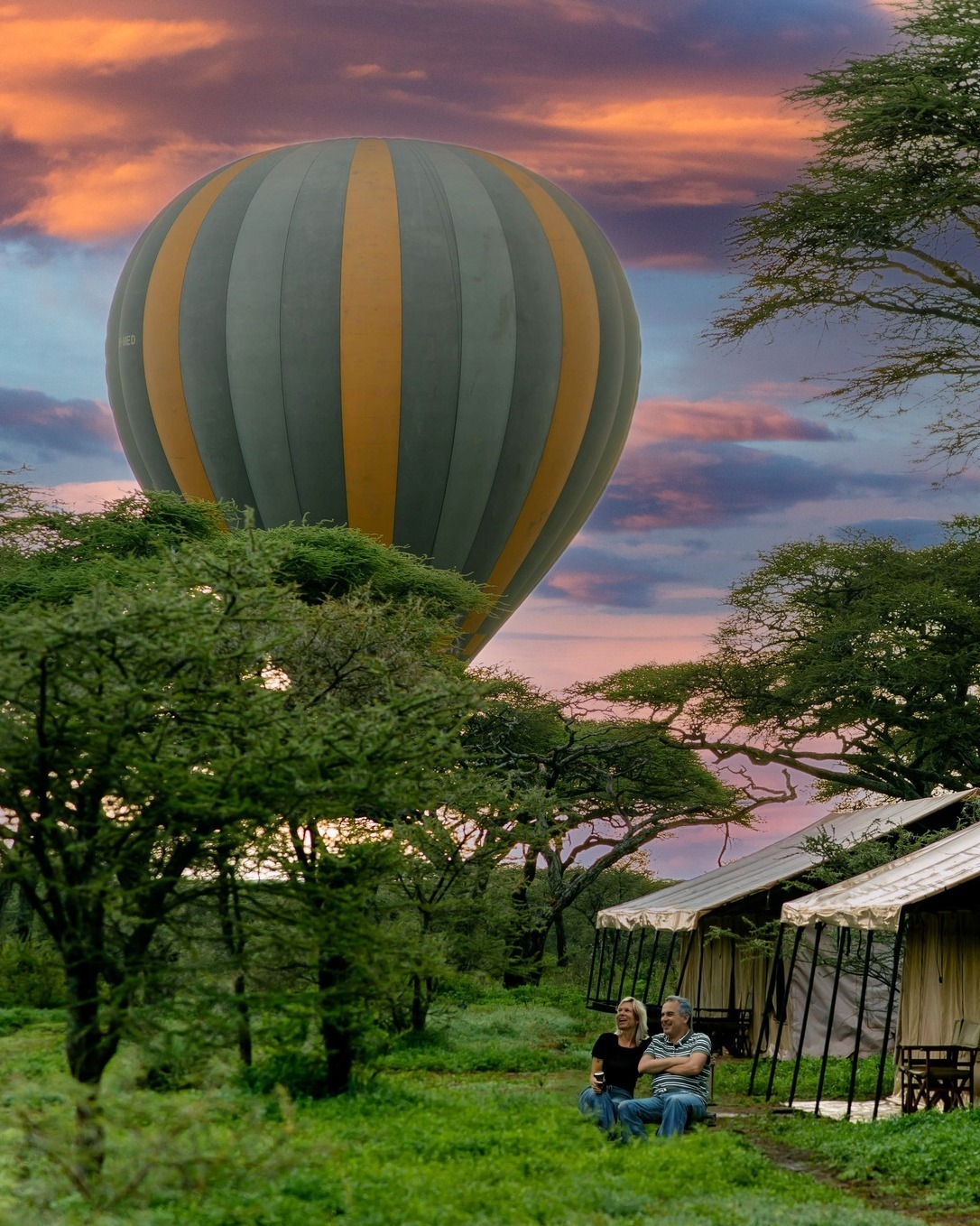
- Luxury tented camps.
- High-end safari lodges.
The best accommodation location depends on the region you want to explore.
For example, staying in Kogatende can be convenient during the northern migration season, while Seronera is a popular base for central Serengeti wildlife viewing.
Accommodation Around Ngorongoro
Accommodation is commonly found around the crater rim, in Karatu, and in other parts of the Ngorongoro Conservation Area.
Staying near the crater rim can provide beautiful views and convenient access for an early crater descent.
Karatu offers additional lodge options for travellers exploring the northern Tanzania circuit.
Can You Visit Serengeti and Ngorongoro on the Same Safari?
Yes. Combining Serengeti and Ngorongoro is one of the most popular ways to experience northern Tanzania.
A combined itinerary allows visitors to enjoy two very different wildlife destinations during one holiday.
A possible itinerary is:
Day 1: Tarangire National Park
Explore the park’s baobab trees, elephant populations, and other wildlife.
Day 2: Serengeti National Park
Travel towards Serengeti and enjoy an afternoon game drive.
Day 3: Serengeti National Park
Spend the day exploring the plains and searching for wildlife.
Day 4: Ngorongoro Conservation Area
Travel towards the Ngorongoro region and enjoy the scenery along the way.
Day 5: Ngorongoro Crater
Descend into the crater for a full-day wildlife experience before returning to Arusha.
This is an example itinerary and can be adjusted depending on your travel dates, budget, and preferred accommodation.
Which Destination Should First-Time Safari Visitors Choose?
If this is your first safari in Tanzania, both destinations are excellent choices.
Choose Serengeti if you are interested in:
- The Great Wildebeest Migration.
- Large open landscapes.
- Lions, cheetahs, and other predators.
- Multiple days of wildlife exploration.
- The experience of staying in the African wilderness.
Choose Ngorongoro if you are interested in:
- A spectacular volcanic landscape.
- Concentrated wildlife viewing.
- Searching for black rhinos.
- A full-day crater safari.
- Panoramic scenery and photography.
If your budget and schedule allow, visiting both destinations is an excellent option.