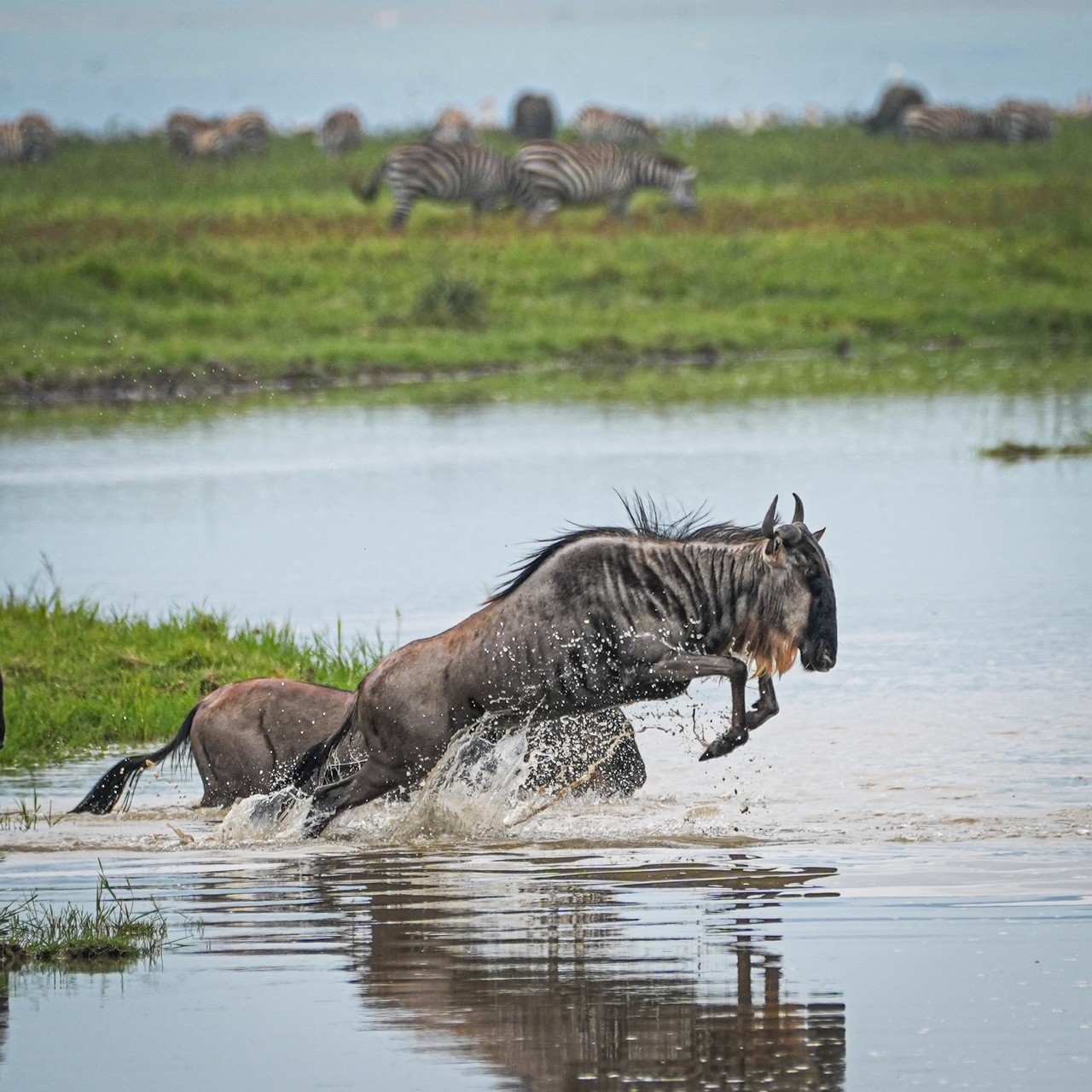
Where do wildebeest give birth in Serengeti? This is one of the most frequently asked questions by travellers planning to experience the Great Wildebeest Migration in Tanzania.
Every year, hundreds of thousands of wildebeest calves are born across the southern Serengeti ecosystem, particularly in the Ndutu area. This remarkable natural event attracts wildlife enthusiasts, photographers, and safari travellers from around the world.
The calving season is one of the most exciting periods to visit Serengeti because visitors can witness newborn wildebeest taking their first steps, large herds gathering across the plains, and predators such as lions, cheetahs, and hyenas searching for opportunities to hunt.
In this guide, Pale Tours explains where wildebeest give birth, when the calving season happens, why the southern Serengeti is important, and how to plan a safari to experience this incredible wildlife event.
Where Do Wildebeest Give Birth in Serengeti?
Wildebeest mainly give birth in the southern Serengeti ecosystem, particularly around the Ndutu plains and the short-grass plains extending towards the Ngorongoro Conservation Area.
The region provides important grazing grounds for pregnant wildebeest and their newborn calves.
The main calving areas include:
- Ndutu: One of the most famous locations for witnessing the wildebeest calving season.
- Southern Serengeti plains: Open grasslands that provide nutritious grazing.
- Areas near Lake Ndutu: Important seasonal wildlife habitats.
- Short-grass plains towards Ngorongoro: Grazing areas used by migrating herds depending on rainfall.
The exact location of the herds changes from year to year depending on rainfall, water availability, and grass conditions.
When Is the Wildebeest Calving Season?
The wildebeest calving season generally takes place between January and March, with February often being the peak period.
During this time, large numbers of pregnant wildebeest gather in the southern Serengeti and Ndutu ecosystem.
Many calves are born within a relatively short period, creating one of the largest seasonal wildlife breeding events in Africa.
| Month | Calving Season Experience |
|---|---|
| January | Calving activity increases across the southern plains |
| February | Often the peak period, with many newborn calves |
| March | Calving continues, although the herds may begin changing location |
These months are general seasonal patterns rather than guaranteed dates. Rainfall and grazing conditions influence the movement of the herds.
Why Do Wildebeest Give Birth in Ndutu?
Ndutu is an important calving destination because its seasonal grasslands provide suitable grazing for migrating wildebeest.
After the seasonal rains, fresh grass grows across the plains, offering nutritious food for pregnant females and mothers nursing their calves.
The open landscape also allows wildebeest to gather in large herds.
Some important advantages of this ecosystem include:
- Fresh seasonal grass for feeding.
- Open plains with suitable grazing conditions.
- Large areas where herds can gather.
- Access to seasonal water sources.
- Habitat supporting a wide range of wildlife.
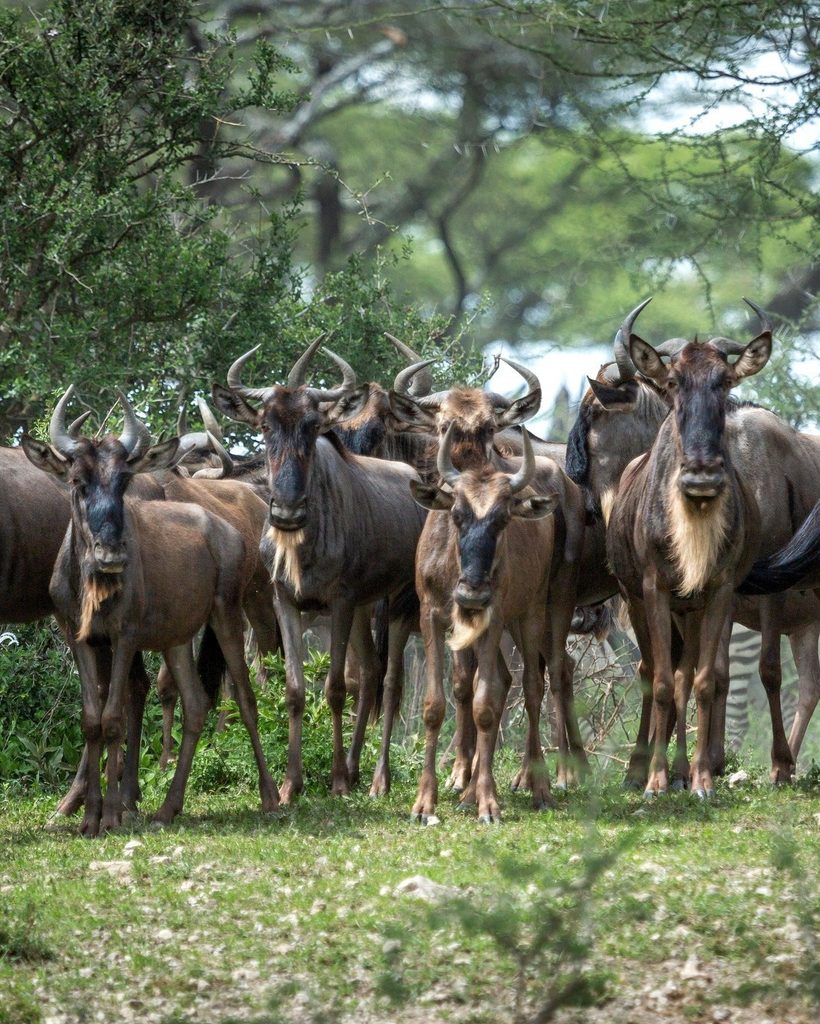
These conditions make the southern Serengeti and Ndutu ecosystem an important part of the Great Migration cycle.
How Many Wildebeest Calves Are Born During the Calving Season?
The Great Wildebeest Migration involves approximately 1.5 million wildebeest, although population estimates can vary.
During the calving season, hundreds of thousands of calves may be born within a relatively short period.
A commonly cited estimate is that around 500,000 wildebeest calves are born during the main calving season.
This concentrated birthing period is remarkable because it gives the herds a large number of young animals within a short time.
The exact number varies, and not every calf survives its early months.
Can You See Baby Wildebeest During a Serengeti Safari?
Yes. The calving season offers excellent opportunities to see newborn wildebeest in their natural environment.
During a game drive in Ndutu and the southern Serengeti, visitors may observe:
- Newborn calves standing beside their mothers.
- Young wildebeest learning to walk.
- Herds moving across open grasslands.
- Mothers nursing their young.
- Groups of calves resting together.
- Predators searching for vulnerable animals.
One of the most fascinating sights is watching a newborn wildebeest stand and begin walking shortly after birth.
Wildebeest calves are adapted to become mobile quickly, which helps them remain with the migrating herd.
Which Predators Hunt Wildebeest Calves?
The calving season also attracts predators because newborn wildebeest are more vulnerable than adult animals.
Several predators live in the southern Serengeti ecosystem.
Lions: Lions are among the main predators of wildebeest. They often hunt near areas where large herds gather.
Cheetahs: Cheetahs hunt smaller and younger animals when opportunities arise. The open plains provide suitable hunting grounds.
Spotted hyenas: Hyenas are effective hunters and scavengers. They may target young wildebeest or feed on carcasses.
Leopards: Leopards are generally more secretive and often hunt smaller prey, although they may take young animals when opportunities are available.
Jackals: Jackals may prey on very young or vulnerable animals.
Predator activity is a natural part of the ecosystem. Visitors may witness hunting behaviour, but sightings are never guaranteed.
Is February the Best Month to See Wildebeest Calving?
February is often considered one of the best months to visit Ndutu for the wildebeest calving season.
During this period, large herds commonly gather across the southern plains, and many calves are born.
February can offer opportunities to experience:
- Large wildebeest herds.
- Newborn calves.
- Predator activity.
- Excellent wildlife photography.
- Beautiful green landscapes.
- Different bird species.
However, January and March can also offer rewarding wildlife experiences. The best travel dates depend on the seasonal movement of the herds.
Is Ndutu Part of Serengeti National Park?
Ndutu is located within the wider Serengeti ecosystem, close to the boundary between Serengeti National Park and the Ngorongoro Conservation Area.
The Ndutu area is especially important during the wildebeest calving season.
Visitors should understand that different sections of the wider ecosystem have different management authorities and park or conservation area regulations.
When booking a safari, ask your operator which areas your itinerary will visit and which entry fees apply.
How Many Days Do You Need to See the Calving Season?
For travellers specifically interested in the wildebeest calving season, spending two to three days around Ndutu is a good starting point.
More days provide additional opportunities to explore different areas and observe wildlife behaviour.
| Safari Duration | Suggested Experience |
|---|---|
| 1 day | A short visit may be possible from a nearby location |
| 2 days | Good introduction to the Ndutu calving season |
| 3 days | More time for game drives and wildlife photography |
| 4–5 days | Greater flexibility to explore the southern Serengeti ecosystem |
If you are travelling from Arusha, remember to consider the driving distance and time required to reach the southern Serengeti.
A longer itinerary can make the journey more comfortable and allow more time for wildlife viewing.
What Is the Difference Between the Calving Season and River Crossing Season?
Both events are part of the Great Wildebeest Migration, but they happen in different locations and at different times of the year.
| Feature | Calving Season | River Crossing Season |
|---|---|---|
| Main period | January–March | Commonly July–October |
| Main location | Southern Serengeti and Ndutu | Northern Serengeti |
| Main attraction | Newborn wildebeest calves | Herds attempting river crossings |
| Wildlife behaviour | Birth and early calf development | Movement across rivers |
| Main predator opportunities | Predators hunting vulnerable calves | Predators hunting around migration routes |
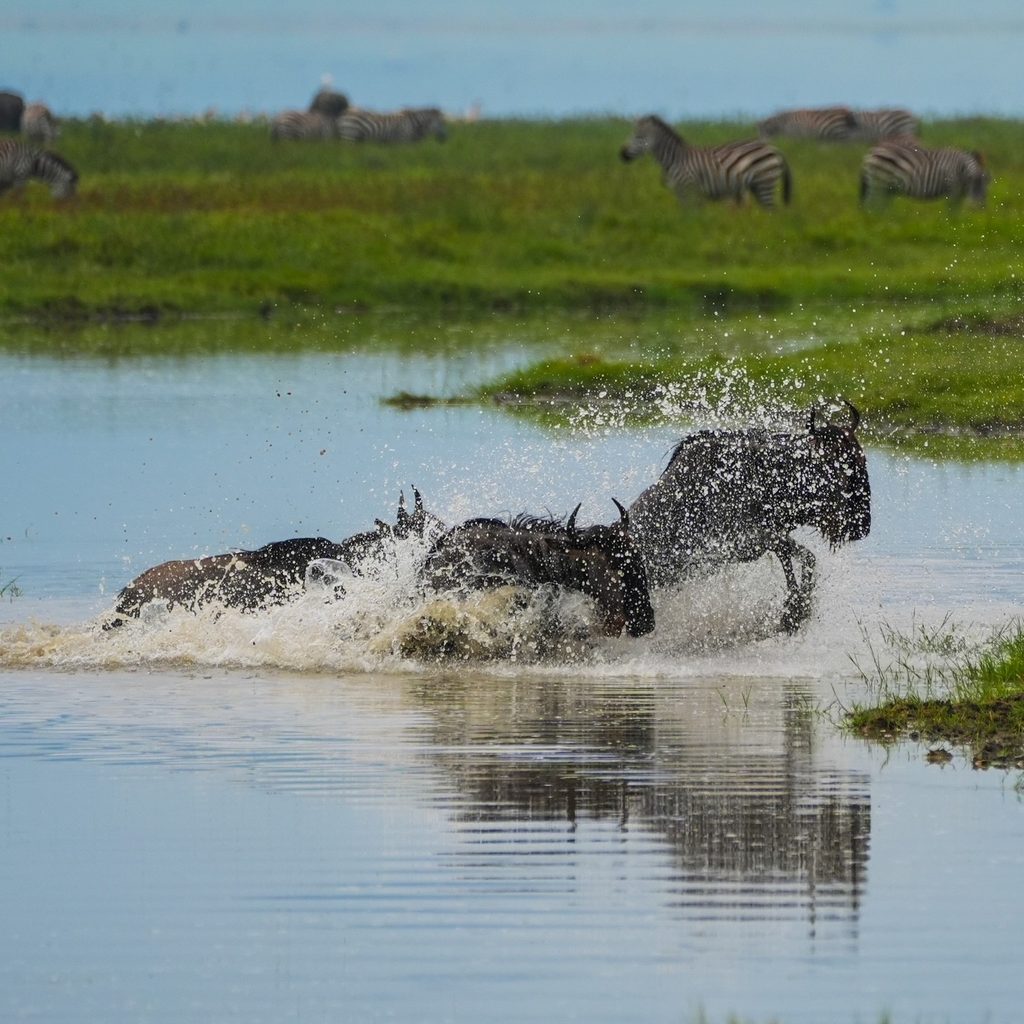
Both seasons offer exceptional wildlife experiences. Your choice depends on whether you prefer seeing newborn animals or hoping to witness dramatic river crossings.
What Should You Pack for a Ndutu Calving Season Safari?
Preparing properly can make your safari more comfortable.
Consider bringing:
- Comfortable safari clothing.
- A warm jacket for early morning game drives.
- Sunglasses and a sun hat.
- Sunscreen.
- Comfortable walking shoes for camp use.
- Binoculars.
- A camera with extra batteries.
- A power bank.
- Personal medication and toiletries.
February is generally part of the green season, so occasional rain is possible. A light waterproof jacket can be useful.
Is a Ndutu Calving Season Safari Worth It?
Yes. A Ndutu safari during the calving season is an excellent choice for travellers interested in wildlife behaviour, photography, and the Great Migration.
Unlike a safari focused mainly on river crossings, the calving season gives visitors an opportunity to observe the beginning of life for thousands of wildebeest.
You may see newborn calves, large herds, predators, and beautiful green landscapes during the same safari.
It is particularly rewarding for photographers and travellers who want to experience a different side of the Great Migration.
Can You Combine Ndutu with Ngorongoro and Serengeti?
Yes. You can combine Ndutu with other northern Tanzania safari destinations.
A possible itinerary could include:
- Day 1: Depart Arusha and travel towards the Ngorongoro area.
- Day 2: Explore the Ndutu plains and enjoy game drives.
- Day 3: Continue wildlife viewing in Ndutu and the southern Serengeti.
- Day 4: Travel towards central Serengeti for game viewing.
- Day 5: Enjoy a game drive in Serengeti before travelling towards Ngorongoro.
- Day 6: Visit Ngorongoro Crater and return to Arusha.
The itinerary can be adjusted according to your travel dates, budget, accommodation preferences, and the location of the migrating herds.