Can I See the Great Wildebeest Migration in Tanzania?
One of the most exciting wildlife experiences in Africa is witnessing the Great Wildebeest Migration in Tanzania. Every year, millions of wildebeest, accompanied by zebras and gazelles, move across the Serengeti ecosystem in search of fresh grass and water.
Many travellers planning a Tanzania safari ask: Can I see the Great Wildebeest Migration in Tanzania? The answer is yes. Tanzania is one of the best destinations in Africa to witness this incredible natural event, especially in Serengeti National Park.
However, the migration is not a single event that happens in one place. It is a continuous movement of wildlife throughout the year. The best location to see the herds depends on the season, rainfall, and availability of fresh grazing.
In this guide, Pale Tours explains when and where to see the Great Wildebeest Migration in Tanzania, what to expect, and how to plan your safari.
What Is the Great Wildebeest Migration?
The Great Wildebeest Migration is the annual movement of large herds of wildebeest across the Serengeti ecosystem in Tanzania and the Maasai Mara in Kenya.
Approximately 1.5 million wildebeest, together with hundreds of thousands of zebras and gazelles, travel across the plains in search of fresh grass and water.
This natural movement is one of the world’s most remarkable wildlife spectacles. It also attracts predators such as lions, cheetahs, leopards, hyenas, and crocodiles.
During a migration safari in Tanzania, visitors may have opportunities to see:
- Large herds of wildebeest moving across open plains.
- Zebras travelling alongside wildebeest.
- Lions hunting or resting near the herds.
- Cheetahs searching for prey.
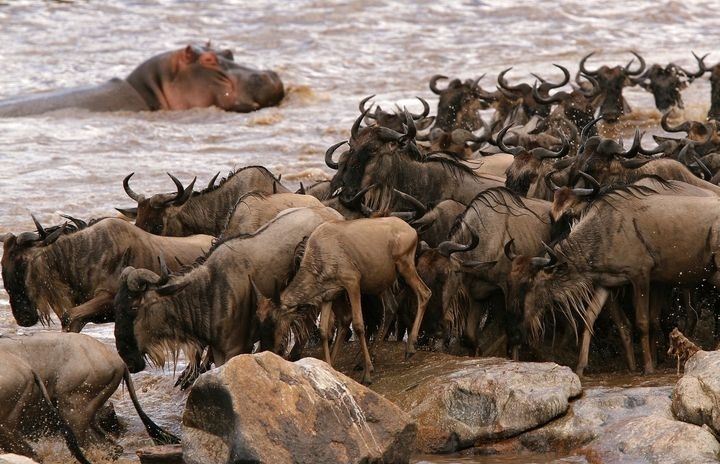
- Crocodiles waiting near river crossings.
- Predators following the migrating animals.
The exact wildlife sightings depend on the season and location.
When Is the Best Time to See the Great Wildebeest Migration in Tanzania?
The Great Wildebeest Migration takes place throughout the year, but different months offer different wildlife experiences.
Here is a general guide to the migration calendar.
January to March: Calving Season
During January, February, and early March, many wildebeest gather in the Ndutu area of the southern Serengeti ecosystem.
February is particularly famous for the calving season, when thousands of wildebeest calves are born.
This period offers excellent opportunities to observe young animals and predator activity.
Best for: Wildebeest calving, newborn animals, lions, cheetahs, and other predators.
April to May: Moving Towards the Central Serengeti
During April and May, the herds generally begin moving away from the southern plains towards the central and western parts of the Serengeti.
These months are part of Tanzania’s main rainy season. Some roads can become muddy, and travel conditions may be challenging.
However, visitors can still enjoy wildlife viewing depending on rainfall and herd movements.
Best for: Travellers interested in quieter safari experiences and seasonal wildlife movements.
June to July: Grumeti River Crossings
Around June and July, many migrating herds move towards the western corridor of Serengeti National Park.
Some groups attempt to cross the Grumeti River, where crocodiles may be present.
River crossings are unpredictable. The herds do not follow a fixed timetable, so sightings cannot be guaranteed.
Best for: Seeing large herds and potentially witnessing Grumeti River crossings.
July to October: Northern Serengeti and Mara River Crossings
The northern Serengeti is one of the most popular areas for witnessing the Great Wildebeest Migration between approximately July and October.
During this period, some herds move towards the Mara River and may attempt to cross into Kenya’s Maasai Mara.
Mara River crossings are among the most dramatic wildlife experiences in Africa. Wildebeest gather along the riverbanks before attempting to cross, sometimes facing strong currents and crocodiles.
However, river crossings depend on herd movements, weather, and other natural conditions.
Best for: Large migration herds and opportunities to witness Mara River crossings.
November to December: Returning Towards the Southern Serengeti
As the short rains begin, many herds gradually move southwards through the eastern and central Serengeti towards the southern plains.
This movement prepares the herds for the next calving season.
Best for: Seeing migrating herds moving across the Serengeti and planning a safari before the next calving season.
Where Can I See the Great Wildebeest Migration in Tanzania?
The main destination for witnessing the migration in Tanzania is Serengeti National Park.
However, different areas of the Serengeti ecosystem offer different migration experiences throughout the year.
1. Ndutu Area
Ndutu is located in the southern Serengeti ecosystem, near the Ngorongoro Conservation Area.
It is especially popular during the calving season between January and March.
Visitors may see large concentrations of wildebeest, zebras, newborn calves, and predators.
2. Central Serengeti
Central Serengeti, particularly the Seronera area, offers excellent wildlife viewing throughout the year.
Depending on the season, visitors may see migrating herds, resident wildlife, lions, leopards, and cheetahs.
3. Western Serengeti
The western corridor is an important migration area, particularly around June and July.
The Grumeti River is one of the locations where migrating wildebeest may attempt river crossings.
4. Northern Serengeti
Northern Serengeti is famous for opportunities to witness Mara River crossings, especially between July and October.
Areas around Kogatende are popular for migration safaris during this period.
Can I See the Wildebeest Migration on a Short Tanzania Safari?
Yes, it is possible to see migrating wildlife during a shorter safari, but the best itinerary depends on the season and where the herds are located.
For example:
- A 3-day safari may include selected Serengeti areas depending on travel time and seasonal conditions.
- A 4-day safari can allow more time for exploring the Serengeti and another northern circuit destination.
- A 5-day or longer safari provides more flexibility to explore different wildlife areas.
If your main goal is to witness the Great Wildebeest Migration, it is important to choose the right location rather than simply booking a safari based on the number of days.
Are River Crossings Guaranteed During a Migration Safari?
No. River crossings are natural events and cannot be guaranteed.
Wildebeest may gather near a river for hours or days before crossing. Sometimes they change direction or move to another crossing point.
Even when you visit northern Serengeti during the migration season, there is no guarantee that a river crossing will happen during your stay.
A longer safari can improve your opportunities because it gives you more time to follow the herds and explore different areas.
What Animals Can I See During the Great Wildebeest Migration?
Although wildebeest are the main attraction, the migration also creates opportunities to see many other African animals.
Common sightings may include:
- Zebras
- Thomson’s gazelles
- Grant’s gazelles
- Lions
- Leopards
- Cheetahs
- Spotted hyenas
- African elephants
- Giraffes
- Nile crocodiles
- Various bird species
The Serengeti is also home to many resident animals that can be seen outside the main migration periods.
How Do I Plan a Great Wildebeest Migration Safari in Tanzania?
Planning a successful migration safari requires choosing the right travel dates, accommodation location, and safari route.
Here are some important things to consider:
1. Choose your travel month carefully. Different months offer different migration experiences, from calving season in Ndutu to possible river crossings in northern Serengeti.
2. Select the right location. Your accommodation should be positioned conveniently for the migration area you want to explore.
3. Allow enough time. Spending several days in the Serengeti gives you more opportunities to follow wildlife movements.
4. Book early during popular seasons. Accommodation in northern Serengeti and Ndutu can be in high demand during migration periods.
5. Travel with an experienced local guide. A knowledgeable guide can help you understand seasonal wildlife movements and choose suitable game drive areas.
Why Book Your Great Wildebeest Migration Safari with Pale Tours?
At Pale Tours, we organise Tanzania wildlife safaris to help visitors explore the Serengeti and other famous national parks.
We can help you plan a migration safari based on your travel dates, budget, accommodation preferences, and the wildlife experience you want.
Our safari arrangements can include:
- Private and shared safari options.
- 4×4 Land Cruiser vehicles with pop-up roofs.
- Experienced local safari guides.
- Serengeti and Ngorongoro safari itineraries.
- Seasonal Ndutu and northern Serengeti safari routes.
- Accommodation options depending on your budget.
Whether you want to experience the calving season in Ndutu or look for river crossings in northern Serengeti, our team can help you select a suitable safari itinerary.
Frequently Asked Questions About the Great Wildebeest Migration in Tanzania
1. What month is best for the Great Wildebeest Migration in Tanzania?
February is an excellent month for witnessing the wildebeest calving season in Ndutu. July to October is popular for seeing large herds in northern Serengeti and possible Mara River crossings.
2. Where does the Great Wildebeest Migration take place in Tanzania?
The migration moves through the Serengeti ecosystem, including the southern plains, central Serengeti, western corridor, and northern Serengeti.
3. Can I see the Great Migration in Tanzania in August?
Yes. August is a popular month for migration safaris in northern Serengeti, where large herds may gather around the Mara River.
4. Can I see the wildebeest migration in Tanzania in February?
Yes. February is one of the best months to visit Ndutu for the calving season, when many wildebeest give birth.
5. How many days do I need for a Great Wildebeest Migration safari?
A safari of around 4 to 6 days can provide a good opportunity to explore the Serengeti and follow seasonal wildlife movements. The ideal duration depends on your starting point and migration location.
6. Is the Great Wildebeest Migration better in Tanzania or Kenya?
Both Tanzania and Kenya offer excellent migration experiences. Tanzania is particularly important for the calving season in Ndutu and the migration’s movement through the Serengeti, while Kenya’s Maasai Mara is famous for seasonal river crossings.
7. Can I see the Great Wildebeest Migration and the Big Five on the same safari?
Yes. The Serengeti is home to the Big Five: lions, leopards, elephants, buffaloes, and rhinos. You may see several of these animals during a migration safari, although sightings of all five are never guaranteed.